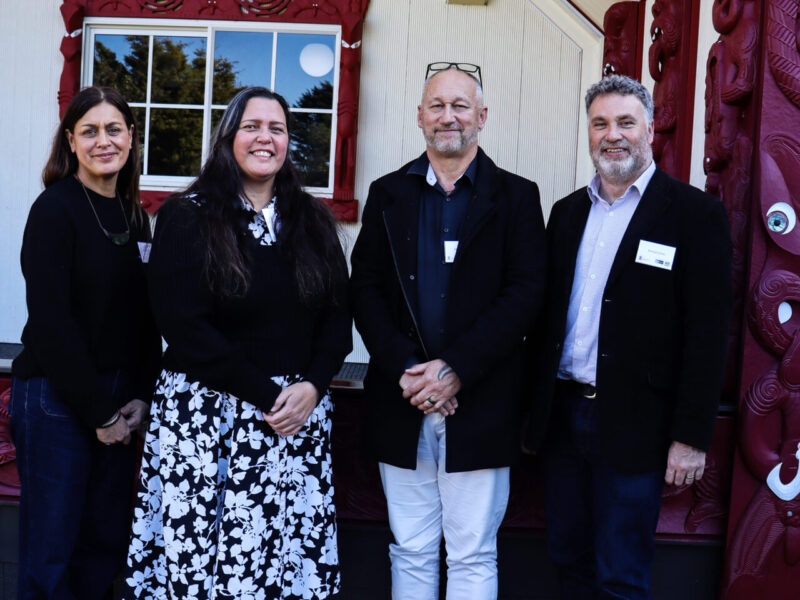
Te Aho a Māui | EIT Hawke’s Bay – 9–11 July 2025
The third symposium of EIT’s Te Kura I Awarua Rangahau Māori Research Centre, held in Hawke’s Bay, brought together over 30 Ngāti Kahungunu presenters and attendees from across Aotearoa to celebrate and advance kaupapa Māori research.
Hosted at Te Ara o Tāwhaki Marae, the symposium welcomed researchers, practitioners, and whānau to share mātauranga, present innovative projects, and strengthen connections within and beyond Te Matau-a-Māui. Though grounded in the voices of Ngāti Kahungunu, the gathering was open to all committed to the growth of rangahau Māori.
Celebrating Kahungunu Rangahau
The programme offered a rich and inspiring mix of presentations and discussions across different kaupapa including Māori health and wellbeing, climate change adaptation, te reo Māori revitalisation, Indigenous data sovereignty, and the role of tikanga in research and practice.
Four keynote speakers, all of Ngāti Kahungunu descent, helped anchor the three-day symposium:
Dr Pauline Harris
(Rongomaiwahine, Ngāti Rakaipaaka, Ngāti Kahungunu ki te Wairoa)
Associate Professor, Astrophysics, Massey University; Chair, SMART; Deputy Director Māori, MacDiarmid Institute
Dr Carwyn Jones
(Ngāi Te Apatu, Ngāti Kahungunu)
Kaihautū, Te Whare Whakatupu Mātauranga, Te Wānanga o Raukawa; Honorary Adjunct Professor, Te Herenga Waka—Victoria University of Wellington; Fellow of the Royal Society of New Zealand
Dr Phillip Wilcox
(Ngāi Te Rākato, Rongomaiwahine, Ngāti Rakaipaaka, Ngāti Kahungunu ki te Wairoa)
Associate Professor, Department of Mathematics and Statistics, University of Otago; Deputy Director (Māori), Maurice Wilkins Centre
Professor Suzanne Pitama
(Ngāti Kahungunu, Ngāti Whare)
Dean, University of Otago Medical School; Registered Educational Psychologist
Each kōrero reminded attendees of the depth, creativity, and relevance of Māori-led research across many disciplines. These keynote presentations were woven alongside an equally impressive programme of speakers whose work showcased the strength of rangahau across generations, disciplines, and hapū within Ngāti Kahungunu.
Rangahau Embedded in Community
Throughout the three days, over 30 Ngāti Kahungunu presenters shared their rangahau through presentations delivered in both te reo Māori and English. Topics ranged from marae-led COVID-19 responses and kaupapa-driven aged care to kapa haka as healing, mātauranga-informed environmental research, and more.
A central focus of the symposium was supporting emerging researchers and building research capability within Ngāti Kahungunu. Participants engaged in vibrant discussions, celebrated achievements, and explored opportunities for collaboration and knowledge exchange.
Piri Galbraith (Ngāti Kahungunu, Ngāti Awa, Ngāti Ranginui; Kurawaka Limited) reflected:
“Realising our potential, my potential. Listening to others present their research, witnessing various ways of presenting and researching – an honour to be part of this Symposium. This experience has validated the need to write, write, write! Publish, research and record it all. PhD here I come!”
A special highlight of the symposium was the Emerging Research Award, recognising outstanding contributions by early-career researchers demonstrating exceptional promise. This year’s recipient was Ashleigh Keenan (He uri nō te Pakipakitanga o Hinetemoa; nō Ngāti Ngarengare me Ngāti Mihiroa o Kahungunu), an Ōtākou Whakaihu Waka graduate and emerging Māori researcher. Her presentation — “Ngāti Kahungunu and Climate Change Adaptation: Weaving Indigenous Knowledge into Climate Resilience” — explored how whakapapa, whenua, and mātauranga shape the ways Ngāti Kahungunu communities respond to climate change.
Whanaungatanga and Wānanga
The symposium was more than a conference – it was a wānanga grounded in whanaungatanga and manaakitanga. Over three days of shared kai, waiata, kōrero and connection, relationships were strengthened between generations, disciplines, and communities.
“I have always known that there are many Ngāti Kahungunu descendants out there doing amazing work, and this symposium provided a platform to showcase a few of those… but we know there are many, many more, and look forward to bringing them home too.”
– Professor Annemarie Gillies (Ngāti Kahungunu, Ngāti Awa, Te Whānau-ā-Apanui, Te Arawa), Research Professor and Co-Director, Te Kura i Awarua Rangahau Māori Research Centre, EIT.
At the symposium dinner on the second evening, guest speaker Dr Fiona Cram (Ngāti Pāhauwera) delivered a powerful address – not in the form of a traditional speech, but through poetry. Her original piece wove together themes and insights from the first two days. The room was still as her words captured the wairua of the gathering.
On the final day, she returned to share a second reading – now enriched by the kōrero and kaupapa that had continued to unfold. Her poetic reflection reminded all present that kaupapa Māori research speaks not only to the mind, but also to the heart.
Te huarahi ki mua: The path ahead
The symposium was made possible with the support of a strong collective of sponsors and supporters – including Ngāti Kahungunu Iwi Incorporated, who made significant financial and communications contributions; EIT, Te Rau Ora, Choices Kahungunu Health Services, Te Taiwhenua o Heretaunga, and Kohuorangi Collective, who captured the wairua of the event through videography.
Some presentations were also filmed and edited by staff and students from EIT’s IDEAschool, contributing valuable support while gaining hands-on experience.
The symposium continues the vision laid out by the establishment of Te Kura i Awarua Rangahau Māori Research Centre – to centre kaupapa Māori research in the region and grow future generations of Ngāti Kahungunu scholars.
“Nō Ngāti Kahungunu, mō Ngāti Kahungunu – koirā te karanga.”
This symposium affirmed the power of coming together on our own whenua to honour, share, and inspire research grounded in te ao Māori. It underscored the importance of collective efforts to sustain and grow Māori knowledge for generations to come.
View the full photo gallery:
https://tekuraiawarua.org/nga-ringa-rangahau-symposium-gallery/
Watch the presentations:
https://tekuraiawarua.org/nga-ringa-rangahau-symposium-presentations
Follow us on Facebook:
facebook.com/tekuraiawarua