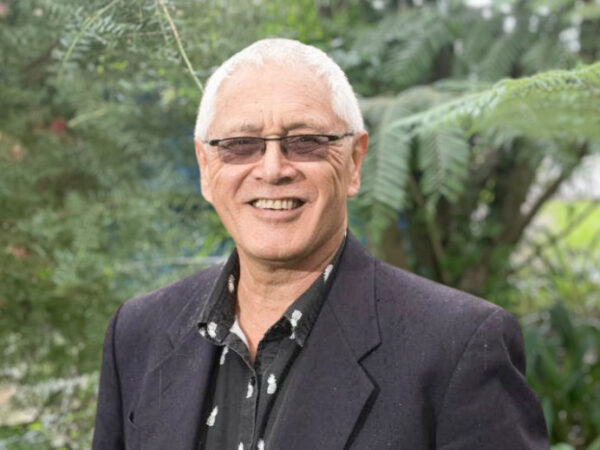
Professor David Tipene-Leach

Research Professor/Co-Director

David Tipene-Leach (Ngāti Kahungunu) is a driving force behind Te Kura i Awarua, championing community research and its potential for real change in Aotearoa. He emphasises the importance of building Māori and Indigenous research capacity, particularly among the younger generation, and aligning research with community values, guiding us towards a more equitable future.

NGĀ PUKAPUKA RANGAHAU

Research Papers

Rangatahi Youth-Led Dissemination Campaign for Cocreated Eating and Well-Being Guidelines: Process and Pilot Implementation Evaluation
  1. Christison L.
  2. Railton R.
  3. Glassey R.
  4. Makirere Haerewa R.
  5. Tipene-Leach D.
  6. Swinburn B.

This study aimed to present the process evaluation of the co-design and implementation of the pilot digital media dissemination campaign of the Manaora Rangatahi Guidelines.

The co-creation of eating and wellbeing guidelines with rangatahi (young people) in Aotearoa New Zealand
  1. Railton R.
  2. Glassey R.
  3. Goddard E.
  4. Tipene-Leach D.
  5. Makirere Haerewa R.
  6. Christison L.
  7. Swinburn B.

Researchers partnered with young people in Hawke’s Bay to co-create a set of culturally grounded eating and wellbeing guidelines for New Zealand youth, blending scientific evidence with mātauranga Māori – resulting in twenty invitational guidelines covering nutrition, physical activity, sleep, screen time and mental wellbeing, designed to be relevant and accessible for all rangatahi across Aotearoa.

Free, healthy school lunches in New Zealand: A Value for Investment analysis
  1. Mejía Toro C.
  2. King J.
  3. Mackay S.
  4. Tipene-Leach D.
  5. Swinburn B.

This paper evaluates the Ka Ora, Ka Ako school lunch programme demonstrating its delivery of value by improving food security, nutrition, wellbeing, and educational engagement for students. It highlights the programme’s wide social and economic benefits while warning that recent funding cuts risk undermining its effectiveness and long-term impact.

Food Systems, Indigenous Knowledge and Systems Thinking: A Case Study in Regional New Zealand
  1. Glassey R.
  2. Tipene-Leach D.
  3. Rees D.
  4. Swinburn B.

This paper presents a case study of Nourishing Hawke’s Bay, showing how systems thinking and mātauranga Māori can be combined to co-design community-led solutions to child food insecurity. It demonstrates how school lunch programmes can act as a platform for wider food system change, improving nutrition, wellbeing, and regional food resilience.

Towards Regional Food Security and Food System Sustainability: Findings From a Stakeholder Cognitive Mapping Study
  1. Kearns-Steed A.
  2. Glassey R.
  3. Railton R.
  4. Tipene-Leach D.
  5. Swinburn B.
  6. Rees D.

Food insecurity in Hawke’s Bay is not driven by lack of production but by weak community connection and poor local distribution. A sustainable system depends on strengthening iwi and community partnerships to build trust, alongside creating a locally controlled distribution network that keeps food within the region and reaches those who need it.

Cultural Safety Training Plan for Vocational Medicine in Aotearoa
  1. Simmonds S.
  2. Carter M.
  3. Haggie H.
  4. Mills V.
  5. Lyndon M.
  6. Tipene-Leach D.

This training plan outlines a framework for integrating cultural safety into vocational medical training programmes, focusing on health equity for Māori and underserved populations. It provides guidance for medical colleges to develop cultural safety training that supports Māori health equity and practitioner competency.

Cultural Safety in Vocational Medical Training
  1. Tipene-Leach D.
  2. Haggie H.
  3. Potiki M.
  4. Carter M.

This report addresses the underrepresentation of Māori in vocational medical training and provides recommendations for improving cultural safety in training programmes. It examines cultural safety education in medical training, identifying best practices to support Māori practitioners.

The Choosing Wisely Campaign and Shared Decision-Making with Māori
  1. Tipene-Leach D.
  2. Adcock A.
  3. Abel S.
  4. Sherwood D.

This study explores how the Choosing Wisely campaign can address health inequities for Māori by promoting shared decision-making and culturally safe care. It examines Māori perspectives on patient autonomy, trust, and advocacy in healthcare decisions.

Choosing Wisely Means Choosing Equity
  1. Adcock A.
  2. Tipene-Leach D.

This study explores how the Choosing Wisely campaign can address health inequities for Māori by promoting shared decision-making and culturally safe care. It examines how implementing Choosing Wisely through an equity-focused approach can improve Māori healthcare experiences and outcomes.

Why Cultural Safety Rather than Cultural Competency is Required to Achieve Health Equity: A Literature Review and Recommended Definition
  1. Curtis E.
  2. Jones R.
  3. Tipene-Leach D.
  4. Walker C.
  5. Loring B.
  6. Paine S.
  7. Reid P.

This paper advocates for a shift from cultural competency to cultural safety in healthcare, focusing on addressing power imbalances and institutional racism to achieve health equity.

Understanding the experiences perspectives and values of indigenous women around smoking cessation in pregnancy: Systematic review and thematic synthesis of qualitative studies
  1. Walker R.
  2. Graham A.
  3. Palmer S.
  4. Tipene-Leach D.
  5. Jagroop A.

This review highlights the need for culturally responsive smoking cessation programmes that support self-agency, peer networks, and address social influences on smoking.

Patients’ experiences of community house haemodialysis: A qualitative study
  1. Walker R.
  2. Tipene-Leach D.
  3. Graham A.
  4. Palmer S.

This study explores the experiences of patients, mostly Māori and Pacific, who use community house haemodialysis. It highlights the benefits of this independent dialysis model, which improves patient quality of life by offering flexibility and fostering community support.

Experiences perspectives and values of indigenous peoples regarding kidney transplantation: Systematic review and thematic synthesis of qualitative studies
  1. Walker R.
  2. Tipene-Leach D.
  3. Abel S.
  4. Reynolds A.
  5. Palmer S.
  6. Walker C.

This review examines the experiences of Indigenous peoples with kidney transplantation, identifying cultural barriers and the need for culturally competent care. It emphasises the importance of culturally safe and equitable transplantation services.

Exploring rural and remote patients’ experiences of health services for kidney disease in Aotearoa New Zealand: An in-depth interview study
  1. Walker R.
  2. Tipene-Leach D.
  3. Walker C.
  4. Palmer S.
  5. Hay S.

This study explores the challenges faced by rural and remote patients with chronic kidney disease, such as emotional strain and financial burdens. It highlights the need for healthcare solutions that address these geographic and social challenges.

“We need a system that’s not designed to fail Māori”: Experiences of racism related to kidney transplantation in Aotearoa New Zealand
  1. Walker R.
  2. Tipene-Leach D.
  3. Abel S.
  4. Palmer S.
  5. Walker C.
  6. Heays N.

This study reveals the impact of racism on Māori during the kidney transplantation process. It identifies institutional, personally mediated, and internalised racism, and calls for reforms to ensure culturally respectful and equitable care for Māori.

Values perspectives and experiences of indigenous Māori regarding kidney transplantation: A qualitative interview study in Aotearoa/New Zealand
  1. Walker R.
  2. Tipene-Leach D.
  3. Palmer S.
  4. Abel S.
  5. Walker C.
  6. Heays N.

This study examines Māori experiences with kidney transplantation, highlighting systemic barriers, including racism and poor healthcare communication, and the need for culturally responsive care.

Health care delivery of kidney transplantation to indigenous Māori in Aotearoa New Zealand: A qualitative interview study with clinician stakeholders
  1. Walker R.
  2. Tipene-Leach D.
  3. Palmer S.

This study examines Māori experiences with kidney transplantation, highlighting systemic barriers, including racism, poor healthcare communication, and access inequities. It explores cultural values, donor hesitancy, and the impact of social determinants on transplant access.

The Impact of the COVID-19 Level 4 Lockdown on Food Security Among Whānau of Decile 1 Schools
  1. Tipene-Leach D.
  2. McKelvie-Sebileau P.

This study investigates the impact of New Zealand’s COVID-19 Level 4 lockdown on food security in deprived communities, focusing on the role of schools as support hubs. It highlights the effectiveness of school–whānau networks and suggests schools could serve as long-term food security hubs.

Combining Cognitive Mapping and Indigenous Knowledge to Improve Food Environments in Regional New Zealand
  1. McKelvie-Sebileau P.
  2. Rees D.
  3. Swinburn B.
  4. Gerritsen S.
  5. D’Souza E.
  6. Tipene-Leach D.

This research uses cognitive mapping and Indigenous knowledge to explore food environments and their influence on children’s health in regional New Zealand. It highlights factors shaping food access and the role of mātauranga Māori in solutions.

Community Co-design of Regional Actions for Children’s Nutritional Health Combining Indigenous Knowledge and Systems Thinking
  1. McKelvie-Sebileau P.
  2. Rees D.
  3. Tipene-Leach D.
  4. D’Souza E.
  5. Swinburn B.
  6. Gerritsen S.

This study engages Māori and Pasifika communities in co-designing actions to improve children’s nutrition using systems thinking and Indigenous knowledge. It applies system dynamics to address socioeconomic and environmental influences on food choices.

Nourishing Hawke’s Bay: He Wairua Tō Te Kai – Food Security, Health Behaviours, and Wellbeing in Children in Regional New Zealand
  1. McKelvie-Sebileau P.
  2. Gerritsen S.
  3. Swinburn B.
  4. D’Souza E.
  5. Tipene-Leach D.

This study focuses on the well-being of children in Hawke’s Bay, highlighting issues like food insecurity, dietary habits, and overall well-being. It provides baseline data to evaluate public health initiatives aimed at improving nutrition and food security.

Applying the Complementary Knowledge Bases of System Dynamics and Indigenous Knowledge in Public Health Research in Aotearoa, New Zealand
  1. McKelvie-Sebileau P.
  2. Pekepo C.
  3. Rees D.
  4. Swinburn B.
  5. Gerritsen S.
  6. Tipene-Leach D.

This paper explores the synergy between Systems Thinking and Indigenous knowledge in addressing public health issues in Aotearoa, New Zealand.

Healthy Food Environments in Early Learning Services: An Analysis of Manager Survey Responses, Menus, and Policies in Regional New Zealand Early Childhood Education and Care Centres
  1. McKelvie-Sebileau P.
  2. D’Souza E.
  3. Tipene-Leach D.
  4. Swinburn B.
  5. Gerritsen S.

This research analyses the nutrition policies and menus of Early Learning Services, identifying barriers to promoting healthy food and practices.

Culture of Healthy Eating and Food Environments, Policies, and Practices in Regional New Zealand Schools
  1. Chote B.
  2. McKelvie-Sebileau P.
  3. Swinburn B.
  4. Tipene-Leach D.
  5. D’Souza E.

This study examines the role of food environments in shaping students’ dietary choices, focusing on school policies and practices. It highlights the impact of government-funded school lunch programmes and identifies barriers to improving school food environments.

Systems Mapping of the New Zealand Free and Healthy School Lunch Programme: Perspectives from Lunch Providers
  1. Chote B.
  2. Rees D.
  3. Swinburn B.
  4. McKelvie-Sebileau P.
  5. Glassey R.
  6. Tipene-Leach D.

This research highlights lunch providers’ perspectives on the New Zealand Free and Healthy School Lunch Programme, focusing on nutrition guidelines, supply chain resilience, and student feedback. It examines teacher and principal support to enhance programme effectiveness.

Not Just a Free Lunch: A Logic Model and Evidence Review for the Ka Ora Ka Ako | Healthy School Lunch Programme
  1. Garton K.
  2. Riddell C.
  3. McKelvie-Sebileau P.
  4. Glassey R.
  5. Tipene-Leach D.
  6. Rees D.

This evaluation of the Ka Ora Ka Ako programme highlights its impact on student nutrition, educational outcomes, and community engagement, while identifying areas for improvement. It examines its role in reducing food insecurity, promoting healthy eating, and supporting student well-being.

Mātauranga Māori and Kai in Schools: An Exploration of Traditional Māori Knowledge and Food in Five Primary Schools
  1. Glassey R.
  2. Swinburn B.
  3. Makirere Haerewa R.
  4. McKelvie-Sebileau P.
  5. Tipene-Leach D.

This study explores how traditional Māori knowledge and values around food are integrated into school programmes, focusing on sustainability and cultural connection. It examines how kai initiatives foster environmental awareness, strengthen whānau engagement, and support student well-being.

Health, Wellbeing, and Nutritional Impacts After 2 Years of Free School Meals in New Zealand
  1. McKelvie-Sebileau P.
  2. Swinburn B.
  3. Glassey R.
  4. Tipene-Leach D.
  5. Gerritsen S.

This study examines the positive effects of free school meals on food security, well-being, and equity, particularly for Māori communities. It highlights financial relief, improved nutrition, and the role of school and whānau engagement in fostering healthier eating habits and reducing food insecurity.

Whiriwhiria kia ora ai te tamaiti: An Exploration of Mātauranga Māori to Support Day-to-Day Learning in Five Primary Schools
  1. Glassey R.
  2. Swinburn B.
  3. Makirere Haerewa R.
  4. McKelvie-Sebileau P.
  5. Chote B.
  6. Tipene-Leach D.

This research highlights the integration of Mātauranga Māori into the learning environments of five primary schools, emphasising the importance of blending Māori knowledge with Western educational practices.

Assessing the Potential for School Lunch Programme Ka Ora Ka Ako to Enhance Education, Sustainability, and Health Goals
  1. McKelvie-Sebileau P.
  2. Swinburn B.
  3. Rees D.
  4. Glassey R.
  5. Tipene-Leach D.
  6. Garton K.

This study explores how the Ka Ora Ka Ako programme supports education, sustainability, and health through the provision of free school lunches in New Zealand. It highlights impacts on food security, curriculum integration, and environmental sustainability.